
Nearly 800 clinical studies worldwide are evaluating the use of cells from cord blood, umbilical cord tissue, and placenta in many diseases, such as:
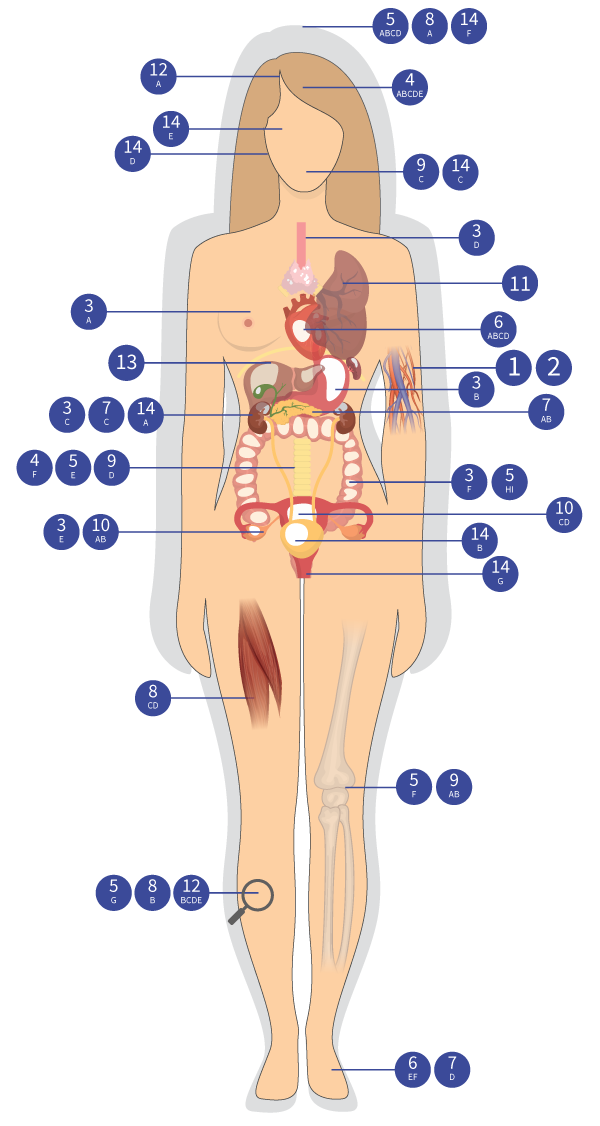
1. Hematologic malignancies (blood cancers)
2. Non-malignant blood disorders (anemias)
3. Oncological diseases:
- Breast cancer
- Stomach cancer
- Kidney cancer
- Esophageal cancer
- Ovarian cancer
- Colorectal cancer
4. Neurological disorders:
- Autism spectrum disorders
- Cerebral palsy,
hypoxic-ischemic encephalopathy - Stroke, traumatic brain injury
- Alzheimer’s disease
- Parkinson’s disease
- Spinal cord injury
5. Autoimmune disorders:
- Graft-versus-host disease (GvHD)
- Lupus
- Amyotrophic lateral sclerosis
- Multiple sclerosis
- Ankylosing spondylitis
- Rheumatoid arthritis
- Systemic sclerosis (scleroderma)
- Crohn’s disease
- Ulcerative colitis
- Cardiomyopathy
- Heart failure
- Hypoplastic left heart syndrome
- Peripheral arterial disease of the lower limbs
- Critical limb ischemia
- Hereditary ataxia
- Epidermolysis bullosa (butterfly skin disease)
- Duchenne muscular dystrophy
- Spinal muscular atrophy
- Damaged articular cartilage
- Arthrosis (osteoarthritis)
- Cleft palate
- Spina bifida
- Premature ovarian failure
- Ovarian dysfunction
- Uterine scars
- Intrauterine adhesions
- Bronchopulmonary dysplasia
- Asthma
- Pneumoconiosis
- Pulmonary sarcoidosis
- Pulmonary fibrosis
- COVID-19-related pneumonia
- Alopecia areata (hair loss)
- Eczema (atopic dermatitis)
- Psoriasis
- Keloid (scars)
- Wounds (healing)
- Liver cirrhosis
- Liver fibrosis
- Primary sclerosing cholangitis
- Kidney failure
- Hemorrhagic cystitis
- Dental pulp inflammation
- Hearing loss (acquired sensorineural)
- Eye diseases
- HIV
- Erectile dysfunction
Clinical studies verifying the use of cord blood, umbilical cord tissue, or placenta
To verify the safety and efficacy of new treatments, long-term monitored clinical studies are conducted worldwide. These studies are subject to strict rules and oversight throughout their duration. Thanks to clinical trials, new treatment options are opening up. The first studies using stem cells from perinatal tissues (cord blood, umbilical cord tissue, and placenta) appeared in 2004, and since then, the safety and feasibility of their administration have been confirmed. Currently, worldwide—especially in the USA, Korea, China, and India—more than 800 clinical studies are ongoing. They focus on the following diagnoses:
- hemato-oncological (for example, expanded tissue-derived cells, lower incidence of graft-versus-host disease, severe aplastic anemia, various types of lymphoma and oncological diseases),
- congenital pediatric diseases (metabolic and immune system),
- neurological (in preterm infants; children with global developmental delay; hypoxic-ischemic encephalopathy; cerebral palsy; acquired brain injury; brain injury in term-born children; stroke; autism; autism spectrum disorders; and others),
- cardiology-related (hypoplastic left ventricle syndrome),
- acquired hearing loss, burns.
In cord blood, primarily hematopoietic (blood-forming) and mesenchymal stem cells are found. After intravenous administration, they are attracted to the site of injury by inflammatory factors produced in the damaged tissue. Subsequently, they are able to regenerate damaged nerve tissue, mainly thanks to two properties—differentiation and immunomodulation.
While their ability to differentiate enables them to replace damaged tissue, through immunomodulatory effects they reduce inflammatory processes present in many conditions, as well as in hypoxic and ischemic brain injuries such as cerebral palsy and hypoxic-ischemic encephalopathy, and also autism—thereby supporting brain regeneration.
In umbilical cord tissue, there is a large amount of mesenchymal stem cells, which are able to influence immune processes in the body and transform into various types of specialized cells of the human organism. Their importance lies primarily in tissue regeneration. Clinical studies with these cells are being conducted in the area of supportive therapy after hematopoietic stem cell transplantation, where their significance is being demonstrated in preventing graft-versus-host disease and improving faster, better cell acceptance by the body. Studies are also underway in the field of immunomodulation in chronic inflammatory diseases and autoimmune diseases, as well as in the regeneration of damaged tissues (liver, pancreas, skin, bones, heart, cartilage, and others).
Placental tissue is an important source of mesenchymal stem cells and so-called endothelial progenitors, which support the formation of new blood vessels. The advantage of cells obtained from the placenta is that, due to their immunological naivety, they are much better tolerated in the recipient’s body. On websites that provide an overview of clinical trials worldwide, studies in the field of immunomodulation are also published, examining the effects of these cells in chronic inflammatory diseases—for example Crohn’s disease and ankylosing spondylitis—as well as in the regeneration of damaged tissues such as idiopathic pulmonary fibrosis, ischemic stroke, hemorrhagic cystitis, pulmonary sarcoidosis, and metabolic diseases.
An up-to-date overview of ongoing clinical studies is provided by www.clinicaltrials.gov.

Cord blood